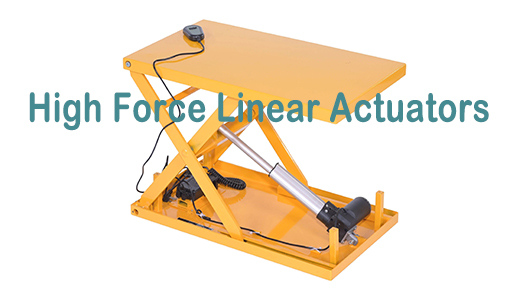
In modern industrial systems, motion control is no longer just about movement—it is about precision, load capacity, reliability, and long-term stability. This is where a high force linear actuator becomes a critical component.
For OEM engineers, equipment manufacturers, and automation solution providers, choosing the right actuator is not simply a product decision—it is a system-level engineering choice that directly impacts performance, safety, and lifecycle cost.
This guide will walk you through how to evaluate, select, and source the right high force electric actuator for your application.
What are high force linear actuators?
A high force linear actuator is a heavy-duty mechanical device designed to generate strong, controlled straight-line motion while delivering very high pushing or pulling force. It is engineered to handle demanding applications where standard actuators are not sufficient, typically producing force outputs ranging from hundreds to tens of thousands of newtons (N), depending on system requirements. Built with reinforced structures and high-strength components, it is capable of moving, pushing, or pulling substantial loads with stability, precision, and reliability, often withstanding forces equivalent to thousands of pounds in industrial and professional environments.

Why High Force Linear Actuators Matter in Industrial Design?
Unlike standard actuators, a high force electric linear actuator is specifically engineered to handle heavy loads, continuous operation, and demanding environments. Typical use cases include:
- Industrial automation systems
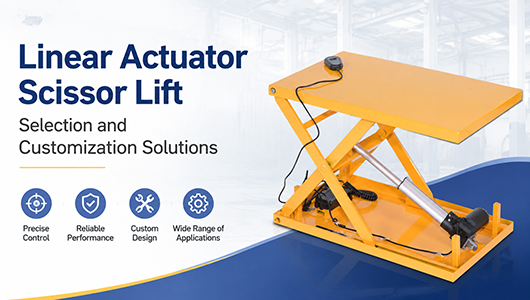
- Lifting platforms and heavy-duty equipment
- Agricultural and construction machinery
- Truck and trailer systems
- Solar tracking systems
- Customized mechanical structures
In these applications, insufficient force or unstable performance can lead to:
- Equipment failure
- Safety risks
- Increased maintenance costs
This is why force calculation and linear actuator selection must be done precisely.
Understanding Force Requirements: From 1000N to 6000N and Beyond
One of the most critical steps in actuator selection is determining the required force output. Depending on your application, you may encounter different force ranges:
- A 1000N linear actuator is typically used for light-duty applications such as access panels or small automation systems.
- A 2000N linear actuator or 3000N linear actuator is common in medium-load equipment like adjustable platforms or agricultural devices.
- A 6000N linear actuator is designed for heavy-duty lifting, industrial machinery, or high-load structural movement.
For markets using imperial units:
- A 500 lb linear actuator suits lighter mechanical tasks
- A 1000 lbs actuator is often used in mid-range lifting systems
- A 2000 lb linear actuator is ideal for heavy-duty industrial applications
👉 Key insight for buyers:
Always calculate at least 1.3–1.5× safety factor above your actual load requirement.
Key Engineering Parameters Buyers Must Evaluate
When sourcing a high force linear actuator, focusing only on force is not enough. Professional buyers evaluate a combination of parameters:
- 1. Stroke Length: Defines how far the actuator travels. Must match your mechanical design.
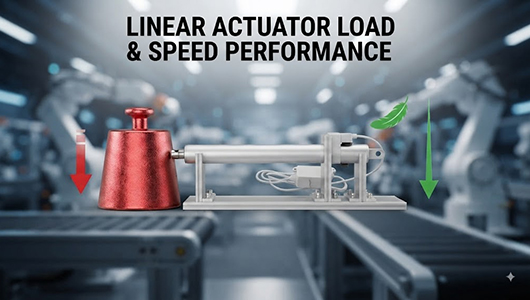
- 2. Speed vs Force Trade-off: Higher force usually means lower speed. Balancing this is essential for system efficiency.
- 3. Duty Cycle: Indicates how long the actuator can operate continuously.
- 4. Mounting Configuration: Front/rear clevis, trunnion mounts, or custom brackets affect installation flexibility.
- 5. Environmental Protection: IP rating determines resistance to dust, water, and harsh environments.
Application-Driven Selection: Matching Actuator to Real Use Cases
Different use cases demand different performance levels, so matching the actuator Features to the real working scenario is essential for ensuring safety, efficiency, and long-term reliability.
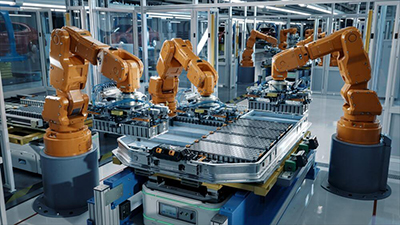
Industrial Automation
Requires:
- High precision
- Stable speed control
- Long duty cycle
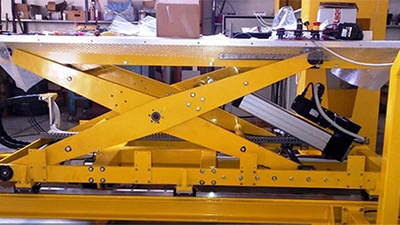
Heavy Equipment & Lifting Systems
Requires:
- High force output (3000N–6000N or above)
- Reinforced structure
- Safety redundancy
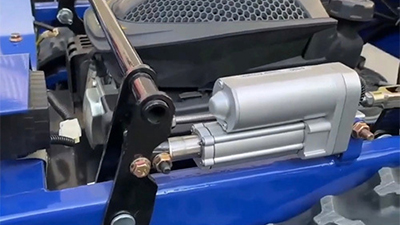
Agricultural Machinery
Requires:
- Dust and water resistance
- Reliable operation under vibration
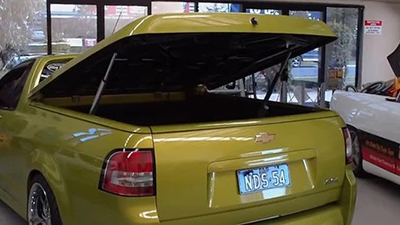
Vehicle & Mobile Systems
Often use:
- 12V systems
- Compact yet powerful actuators
Common Problems Buyers Face (and How to Avoid Them)
When selecting a high-force linear actuator, many buyers focus only on force rating or price, but overlook key technical and application details. This often leads to performance issues, premature failure, or poor system integration. Understanding these common mistakes in advance can help ensure a more reliable and cost-effective solution.
Problem 3: Installation Misalignment
Cause:
- Incorrect mounting geometry
Solution:
- Ensure proper pivot alignment
- Avoid side loading
Problem 1: Linear Actuator Not Strong Enough
Cause:
- Underestimated load
- Ignored angle force loss
Solution:
- Recalculate force with safety margin
- Consider upgrading to 3000N or 6000N range
Problem 2: Premature Failure
Cause:
- Overloading
- Low-quality internal components
Solution:
- Choose industrial-grade actuators
- Verify lifecycle testing data
OEM & Customization: What Serious Buyers Should Look For
For many customers, standard products are often not enough. A reliable supplier should offer:
- Custom force and stroke options
- Voltage customization (12V / 24V / 48V)
- Connector and mounting adaptation
- Consistent quality for bulk orders
- Engineering and technical support
This is especially important for customers involved in:
- Equipment manufacturing
- System integration projects
- Private label or branded product development
How to Choose the Right Supplier (Critical for Long-Term Success)
Selecting the right actuator supplier is essential for ensuring product reliability, performance stability, and long-term project success. Beyond just comparing prices or catalog specifications, customers should evaluate whether the supplier can provide consistent quality, technical support, and flexible solutions that match real application needs.
If you need more detailed guidance or a recommended supplier list, you can refer to this page: Top 10 Linear Actuator Manufacturers in 2026
- Engineering Capability: Not just supplying products, but also understanding applications and solving technical challenges.
- Production Consistency: Ensuring stable quality and performance across small and large batch orders.
- Testing Standards: Including load testing, lifecycle testing, and environmental durability validation.
- Customization Flexibility: Ability to adapt force, stroke, voltage, and mounting to specific project requirements rather than offering only standard options.
Final Thoughts: High Force Actuator Is a System Decision, Not a Component
Choosing a high force linear actuator is not about picking a number—it is about ensuring your entire system performs reliably under real-world conditions. Whether you are selecting:
- a 1000N linear actuator for light applications
- a 2000N or 3000N solution for medium-duty systems
- or a 6000N high force electric actuator for heavy industrial use
Ready to Optimize Your Actuator Selection?
If you are working on a project involving:
- Heavy load movement
- Industrial automation
- Custom mechanical systems
Now is the time to evaluate whether your current actuator solution is truly optimized.
A well-selected high force electric linear actuator will not only improve performance—but also reduce long-term costs, failure risks, and maintenance pressure.