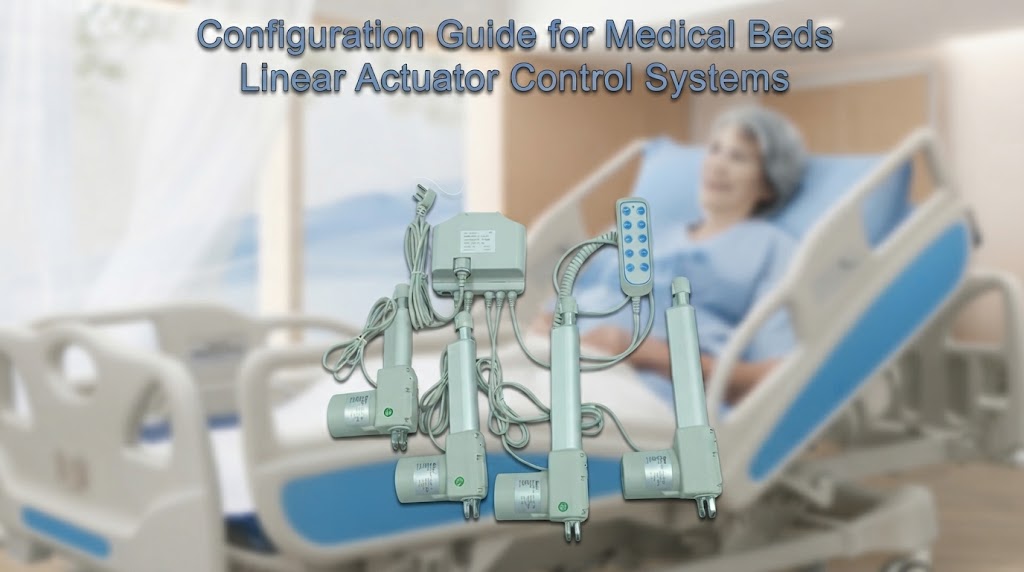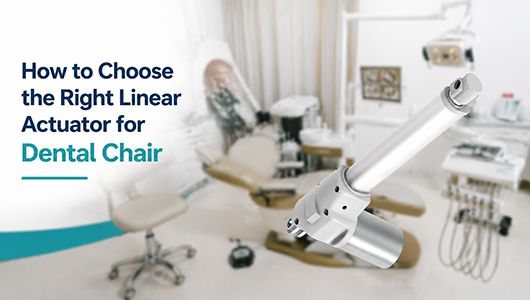
As modern dental clinics evolve towards ergonomic, high-end, and minimally invasive treatments, patients’ expectations for the comfort of dental chairs have reached unprecedented levels. Today’s dental chairs not only require flexible movement but also strive for ultimate quietness, silky-smooth adjustment, and reliable, trouble-free operation.
Behind every smooth, silent, and reliable dental chair lies a critical component that often gets overlooked—the linear actuator for dental chair. Think of it as the muscles and joints of the chair. It handles all the heavy lifting, tilting, and positioning, from raising the entire seat to reclining the backrest. A dental chair linear actuator controls important movements such as:
- Chair height adjustment
- Backrest positioning
- Leg rest movement
- Patient positioning
Although a linear actuator is a relatively small component, its performance directly affects the reliability, safety, and user experience of the entire dental chair. This guide explains the key factors buyers should consider when selecting a dental chair actuator and how to choose the right supplier.
What is a Linear Actuator for Dental Chair?
A linear actuator for dental chair is an electromechanical motion device that converts electrical energy into controlled linear movement. It is designed to move dental chair components smoothly and precisely, allowing automatic adjustment of height, backrest angle, leg rest position, and other seating functions.
Working Principle of the Dental Chair Linear Actuator
To truly appreciate what a linear actuator brings to a dental chair, it helps to understand how it actually works. Don’t worry—we won’t get lost in engineering jargon. Think of it as the bridge between electricity and motion: it takes electrical energy and turns it into the smooth, controlled linear movement that raises, tilts, and adjusts the chair.
Core Components of a Linear Actuator
Before discussing the motion, let us first look at the key components that enable it. A typical electric linear actuator used in dental chairs consists of four main components:
| Component | Function |
|---|---|
| Electric Motor | The power source—usually a DC motor that spins when electricity is applied. |
| Gearbox (Gear Reduction) | Slows down the motor‘s high-speed rotation while multiplying the torque (turning force). |
| Lead Screw or Ball Screw | Converts the rotary (spinning) motion of the motor into linear (straight-line) motion. |
| Spindle / Push Tube | The extendable rod that moves in and out, pushing or pulling the chair mechanism. |
These components work together like a well-oiled machine—literally. The motor spins, the gears reduce speed and increase force, the screw converts rotation to straight movement, and the push tube does the actual physical work of moving the chair.
Step-by-Step Workflow of a Linear Actuator
Here‘s what happens from the moment you press the adjustment button on the dental chair control panel:
Step 1: Electrical Signal Sent
When the dentist or patient presses a button (e.g., “raise seat”), an electrical signal is sent from the control unit to the actuator‘s motor.
Step 2: Motor Spins
The DC motor starts rotating at a high speed—typically several thousand revolutions per minute (RPM). But at this speed, the force (torque) is too low to move a heavy dental chair with a patient on it.
Step 3: Gearbox Reduces Speed, Increases Torque
The spinning motor drives the gearbox, which uses a set of gears to drastically reduce the rotational speed while multiplying the torque. Think of it like riding a bicycle uphill in a low gear—you pedal more times but each push delivers more power. This is where the actuator gains the muscle it needs.
Step 4: Rotary Motion Becomes Linear Motion
The now-slow, high-torque rotation drives the lead screw or ball screw. As the screw turns, the nut or threaded sleeve inside the actuator moves along the screw‘s threads—just like turning a bolt forces a nut to travel along it. This is the magic moment when spinning motion transforms into straight-line (linear) movement.
Step 5: Push Tube Extends or Retracts
The moving nut pushes or pulls the push tube (also called the spindle or piston rod). This tube is connected directly to the dental chair‘s mechanical linkage—raising the seat, reclining the backrest, or extending the leg rest.
Step 6: Feedback (Optional but Common)
In many modern dental chair actuators, built-in sensors (like Hall-effect sensors or potentiometers) track the position of the push tube. This feedback is sent back to the control unit, allowing the chair to:
Stop at precise positions
Remember preset positions (memory function)
Synchronize multiple actuators for coordinated movements
A Simple Analogy to Visualize How a Linear Actuator Works
Imagine turning a bolt with a wrench. If you put a nut on that bolt and hold the bolt still while turning it, the nut will travel up or down the bolt‘s threads. Now imagine replacing your hand with a powerful motor, and replacing the bolt with a long threaded rod. That‘s essentially what a linear actuator does—except it‘s compact, quiet, and strong enough to lift a patient effortlessly.
Visualization of Electric Linear Actuator Movement
| Action | What Happens Inside | Effect on Dental Chair |
|---|---|---|
| Extend | Motor spins forward → gears reduce speed → screw turns → nut moves up → push tube extends outward | Seat rises, backrest reclines, or leg rest extends |
| Retract | Motor spins in reverse → gears reverse → screw turns opposite way → nut moves down → push tube pulls inward | Seat lowers, backrest straightens, or leg rest retracts |
This bidirectional capability is what allows the dental chair to offer a full range of adjustments from a single actuator.
Key Benefits of Linear Actuator in Dental Chair
A dental chair is more than just a seat — it is a precision medical device that requires smooth, reliable, and accurate movement during every procedure. When applied in dental chairs, linear actuators deliver remarkable convenience for both patients and dental practitioners. Here are the key benefits they bring:
- Main Lifting Column / Seat Height: Requires high push force (6,000N to 10,000N), exceptional structural rigidity, and high bending moment resistance to handle heavy vertical loads securely.
- Backrest & Tilt Mechanisms: Requires moderate force, precise limit positioning, and a compact profile to fit inside the upper chair frame.
- Leg Rest / Knee Break: Needs smooth synchronized motion to match patient ergonomic contours naturally.
- Headrest Adjustment: Lightweight, compact, and highly precise for micro-positioning.
BESTOP GT35L9 Dental Chairs Linear Actuator
In 2026, BESTOP launched the highly popular GT35L9 linear actuator (High-Performance Edition). This model not only features the signature smooth operation that defines BESTOP products but also comes equipped with a comprehensive suite of proven safety features. It fully complies with all requisite international standards and regulations. Despite delivering a formidable full-stroke thrust of up to 6,000 N, it operates at an exceptionally low noise level of under 50 dB.

How to Choose the Right Linear Actuator for a Dental Chair
Choosing the right linear actuator for a dental chair requires more than simply selecting a model with the highest load capacity. The actuator must match the dental chair’s mechanical design, movement requirements, and control system to ensure smooth, quiet, and reliable operation.
When selecting a dental chair actuator, manufacturers and buyers should consider key factors such as:
- Voltage: Typically 24V DC or 36V DC, powered by a medical-grade control box for safe and reliable operation.
- Load Capacity (Thrust): Chair lifting actuators usually require around 6,000N, while backrest and leg rest actuators typically use 2,000N–4,000N.
- Stroke Length: Selected based on the required adjustment range for chair height, backrest, and leg rest movement.
- Speed: Provides smooth and stable movement for comfortable positioning without sudden motion or vibration.
- Noise Level: Typically below 45 dB; low-noise models can reach around 40 dB for a quieter patient experience.
- Waterproof Rating: Usually requires IPX4 or IPX6 protection for daily cleaning and liquid splash resistance.
- Position Feedback: Built-in Hall sensors enable accurate positioning and preset chair functions such as reset and rinse positions.
BESTOP Linear Actuator Global Partners
As a leading Chinese manufacturer of linear actuators, BESTOP has dedicated over three decades to the research, development, and refinement of electric actuator systems. We are ready to provide technical consultation to our customers and offer market and application support—leveraging our global presence at trade exhibitions—whenever needed. With production facilities located in Asia, we ensure an ample supply of spare parts.
To help you select the precise model, could you please let me know:
- Are you looking for replacement parts for an existing dental chair, or are you developing a brand-new dental chair design?
- Which specific part of the chair requires the linear actuator (e.g., base lift, backrest adjustment, or headrest)?
- What are the brand, model, stroke length, and thrust force (in Newtons) of the original linear actuator?