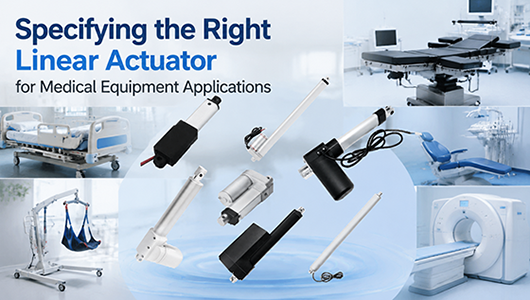
In modern healthcare, medical equipment is no longer limited to simple mechanical structures. From hospital beds that automatically adjust patient positions to surgical tables that support complex procedures, precise motion control has become an essential part of medical technology. Behind many of these movements is a critical component — the linear actuator.
A linear actuator for medical equipment provides controlled linear motion to adjust, lift, position, and automate different medical devices. It helps healthcare equipment achieve smoother operation, improved patient comfort, and safer medical procedures.
Today, electric linear actuators are widely used in various medical applications, including hospital beds, patient lifts, dental chairs, medical imaging systems, rehabilitation equipment, and operating tables.
This article explores the major applications of linear actuators in medical equipment, explains how they work, and provides guidance on selecting the right actuator solution for medical device manufacturers.
What are Linear Actuators?
A linear actuator is a device that converts energy (electrical, pneumatic, or hydraulic) into straight-line motion — either pushing, pulling, lifting, lowering, or positioning a load along a linear path. In simple terms: It turns rotary motion into linear motion.

A typical medical linear actuator consists of:
- DC motor
- Gearbox
- Lead screw mechanism
- Extension rode
- Limit switches
- Optional position feedback sensors
When powered, the actuator extends or retracts to move connected mechanical parts.
This simple but reliable motion principle makes linear actuators ideal for medical equipment requiring controlled movement.
Applications of Linear Actuators in Medical Equipment
Medical equipment requires movement for different purposes — patient positioning, height adjustment, lifting assistance, and precise alignment.
Although these applications have different functions, they all require motion systems that are:
- Reliable → Long service life and stable performance for continuous medical operation
- Smooth → Smooth and precise movement for patient positioning and adjustment
- Quiet → Low-noise operation for comfortable healthcare environments
- Safe → Safe movement with reliable load holding and protection features
- Easy to control → Precise control and easy integration with medical systems
Linear actuators provide the controlled movement needed for these medical applications.
Surgical Tables & Examination Chairs
Surgical tables and examination chairs use 4 to 8 linear actuators positioned under the tabletop, within the base column, and inside the backrest/leg rest sections. These actuators perform height adjustment (raising/lowering the entire table for surgeon ergonomics and patient transfer), Trendelenburg and Reverse Trendelenburg tilts (head-down for pelvic surgery/cerebral perfusion, head-up for upper abdominal procedures), lateral tilt (sideways positioning for kidney and orthopedic surgeries), backrest and leg rest articulation (raising/lowering individual sections for specific surgical access), horizontal sliding (longitudinal tabletop movement for full-body imaging without repositioning the patient), and brake locking/unlocking (securing the table in position during procedures).
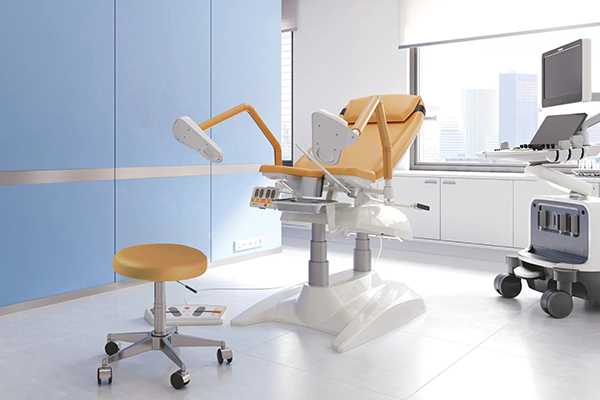
Below are the key factors to consider when selecting a linear actuator for this application.
- Zero backlash required for stable surgical positioning — any play compromises precision.
- Ultra-smooth motion prevents patient shifting during delicate procedures.
- Emergency manual release mandatory for power failure scenarios.
- IEC 60601-1 compliance and IPX4+ for cleaning with disinfectants.
- Load capacity typically 1,500N – 5,000N per actuator.
Hospital Beds (ICU, General Ward, Home Care)
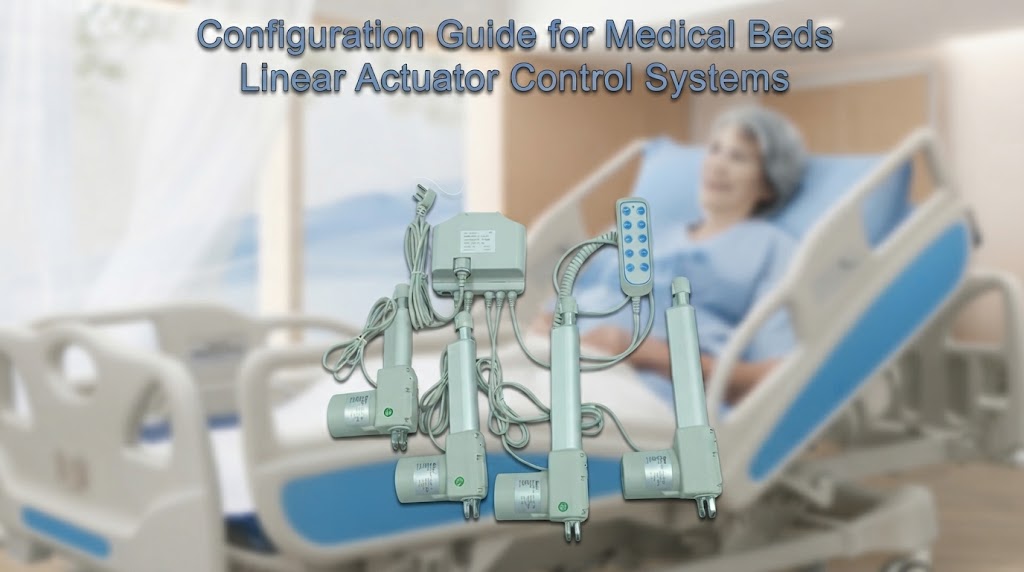
Hospital beds typically integrate 3 to 5 linear actuators located beneath the bed frame, inside the backrest and knee rest mechanisms, and within the base lift columns. These actuators provide backrest elevation (assisting patients to sit up), knee rest elevation (preventing patient sliding when the backrest rises), leg rest adjustment (improving circulation), overall bed height adjustment (facilitating caregiver ergonomics and patient transfer), auto-contour synchronization (simultaneous backrest/knee movement to reduce skin shear), Trendelenburg/Reverse Trendelenburg tilts (for specific medical conditions such as shock or brain injury), side rail raising/lowering (patient safety), lateral rotation/turning function (preventing pressure ulcers by automatically rotating the patient), and cardiac chair positioning (combining backrest, knee, and tilt for cardiac patients).
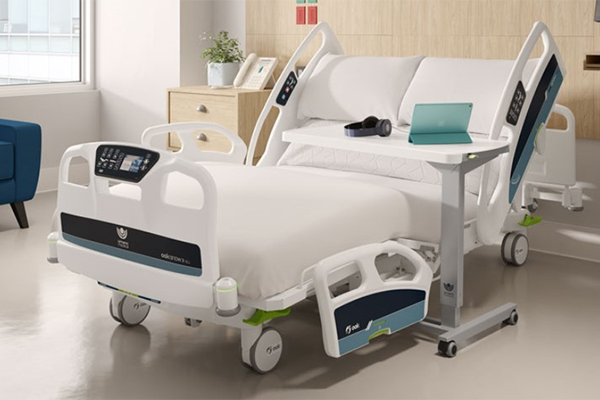
Below are the key factors to consider when selecting a linear actuator for this application.
- Noise level ≤ 45dB critical for patient sleep and ICU environments.
- Anti-pinch / force feedback mandatory to prevent patient injury.
- IPX4 – IP67 for frequent cleaning and spill exposure.
- Emergency battery backup and manual crank release for power outages.
- Duty cycle ≤ 10% — beds operate intermittently, not continuously.
Dental Chairs & Dental Equipment
Dental chairs use 4 to 6 linear actuators positioned under the seat base, inside the backrest frame, within the headrest mechanism, and beneath the instrument tray and overhead light arms. These actuators handle patient chair height adjustment (raising/lowering the chair for dentist access and patient comfort), backrest recline (tilting backward/forward for different procedures), headrest adjustment (positioning the patient’s head for optimal access), instrument tray lift (raising/lowering to the dentist’s preferred working height), dental light lift (elevating and articulating the overhead surgical light), and spittoon/suction arm positioning (moving accessory units into/out of the working area).
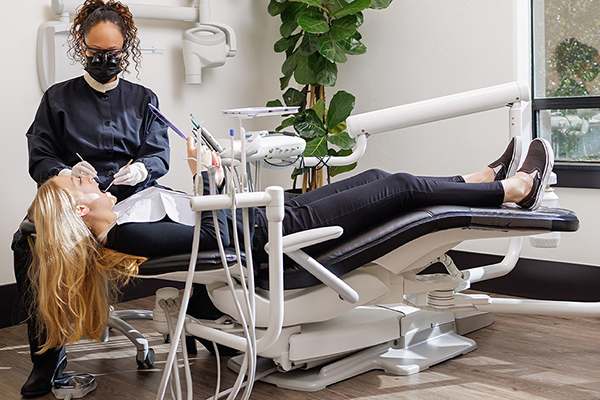
Below are the key factors to consider when selecting a linear actuator for this application.
- Extremely high cycle life — dental chairs operate 20–50 times per patient, 30+ patients daily.
- Compact / slim design required to fit within the chair's aesthetic profile.
- Quiet operation essential for patient anxiety reduction.
- IPX4 minimum for cleaning with water sprays and disinfectants.
- Precise micro-adjustment capability for headrest and tray positioning.
Ophthalmic & Optometry Equipment
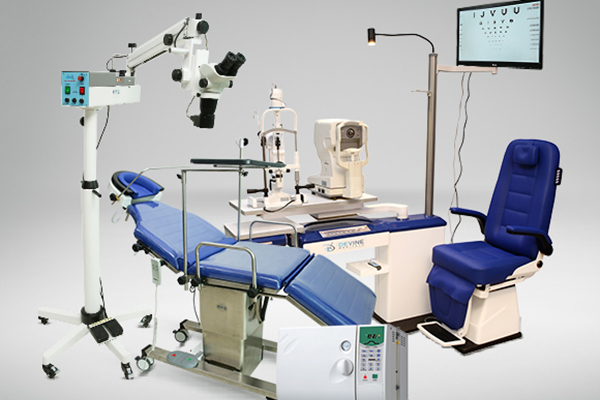
Ophthalmic devices such as slit lamps, fundus cameras, and phoropters use miniature linear actuators positioned within the chin rest column, forehead rest mechanism, instrument table base, and camera focus rails. These actuators perform chin rest lift (micron-precise vertical positioning to align the patient’s eye with the optical axis), forehead rest adjustment (forward/backward and vertical movement for correct patient head placement), instrument table lift (raising/lowering the entire examination platform), phoropter head positioning (moving the lens measurement tool into the correct alignment), and fundus camera focus (fine linear movement for sharp retinal imaging).
Below are the key factors to consider when selecting a linear actuator for this application.
- Micron-level precision essential — even 0.1mm error affects diagnostic accuracy.
- Ultra-low vibration — any movement during imaging ruins image quality.
- Slow / controlled speed — ophthalmic adjustments are incremental, not rapid.
- Minimal audible noise — patients are often anxious and sensitive to sound.
- No magnetic interference — some ophthalmology devices are sensitive to electromagnetic fields.
Imaging & Radiology Equipment (CT, MRI, X-ray)
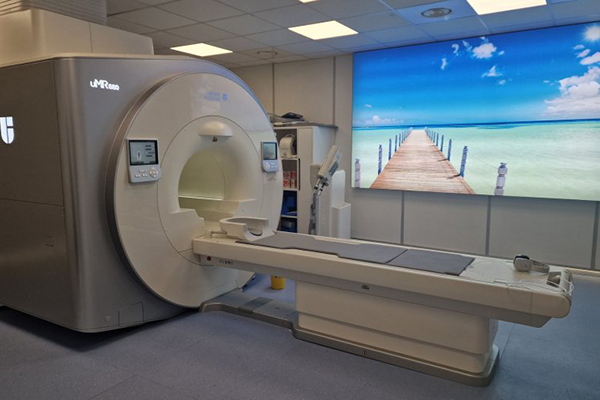
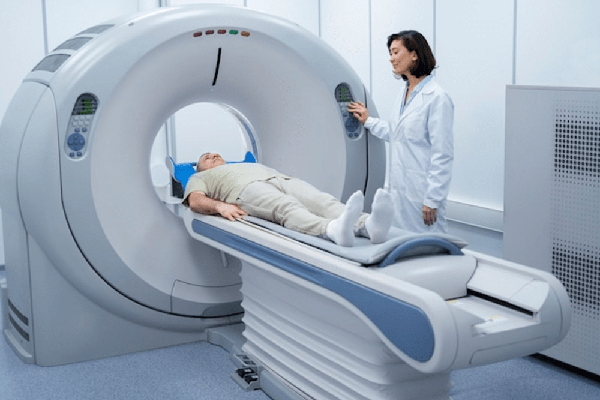
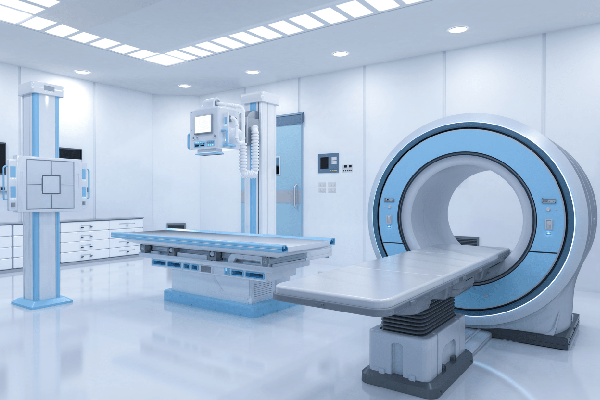
Imaging systems integrate 2 to 4 precision linear actuators located within the patient table base, under the carbon-fiber tabletop, and inside the C-arm/gantry structures. These actuators perform CT scanner table horizontal travel (stepped movement in/out of the gantry for spiral/helical scans), CT table vertical lift (raising/lowering to match gantry height), MRI table horizontal positioning (moving the patient into the bore — requires non-magnetic actuators), MRI table height adjustment (raising/lowering for patient loading/unloading), C-arm rotation and lift (positioning the X-ray system around the patient), X-ray detector vertical/horizontal positioning (moving the flat-panel detector for optimal image capture), contrast injector plunger drive (controlled-speed syringe pushing for contrast media delivery), and Bucky/diaphragm adjustment (moving collimator blades for beam restriction).
Below are the key factors to consider when selecting a linear actuator for this application.
- Non-magnetic materials (e.g., titanium, brass, aluminum) mandatory for MRI-compatible actuators.
- Extreme positioning accuracy — sub-millimeter precision required for diagnostic image stitching.
- High cycle life (> 1,000,000 cycles) for CT tables that move continuously throughout the day.
- Radiation-resistant materials for components near the X-ray source.
- Smooth, jitter-free motion prevents motion artifacts in images.
- Emergency manual release essential for patient evacuation during power failure.
Radiotherapy Equipment (Linear Accelerators, Gamma Knife)
Radiotherapy systems use high-precision linear actuators positioned within the treatment couch base (6D positioning stages), inside the multi-leaf collimator (MLC) housing, and within the collimator rotation mechanisms. These actuators execute treatment couch 6D positioning (sub-millimeter XYZ and rotational movements to precisely target tumor coordinates), couch height adjustment (raising/lowering for patient loading), multi-leaf collimator leaf drive (moving individual tungsten leaves in/out to sculpt the radiation beam to the tumor shape), collimator rotation (rotating the beam-shaping device to match tumor geometry), patient immobilization device positioning (positioning headrests, masks, or knee supports for reproducible setup), and bolus/compensator positioning (moving tissue-equivalent materials into the beam path).
Below are the key factors to consider when selecting a linear actuator for this application.
- Sub-millimeter positioning accuracy (< 0.1mm) — errors directly affect tumor control and healthy tissue damage.
- Absolutely zero backlash — any play compromises radiation targeting precision.
- High load capacity — treatment couches support patients up to 200kg+.
- Patient safety interlocks — actuators must stop immediately if resistance is detected.
- Extreme reliability — any failure interrupts life-saving treatment.
Patient Lifts & Transfer Devices
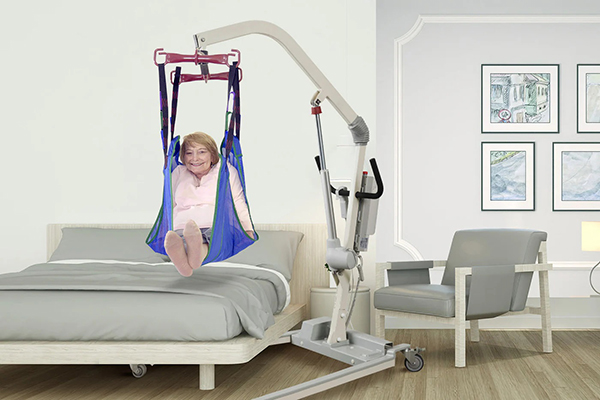
Patient lifts use 1 to 2 linear actuators positioned within the lift column/boom arm mechanism, and sometimes at the sling spreader bar attachment points. These actuators perform lifting arm elevation (raising/lowering the boom to transfer patients from bed to wheelchair, toilet, or bath), sling spreader bar width adjustment (changing the distance between sling attachment points for patient comfort and proper weight distribution), ceiling lift traverse (moving the trolley along overhead tracks — often using linear motor actuators), stand-up lift assist (raising the patient from sitting to standing posture), and bath lift raising/lowering (lowering and raising bath seats for safe immersion and exit).
Below are the key factors to consider when selecting a linear actuator for this application.
- High load capacity — must safely lift patients up to 250kg+.
- Emergency manual release — critical for safe patient evacuation during power failure.
- IPX4 – IP67 required for bath lifts and devices exposed to water.
- Battery operation preferred for portability and safety (no trailing cables).
- Slow, controlled speed — sudden movement during patient transfer is dangerous.
- Smooth acceleration/deceleration prevents patient anxiety and injury.
Wheelchairs (Powered & Manual with Power Assist)
Powered wheelchairs integrate 2 to 4 linear actuators within the backrest frame, under the seat base, inside the leg rest supports, and sometimes in the seat elevation mechanism. These actuators perform backrest recline (tilting backward for pressure relief and comfort), seat tilt (tilting the entire seat with backrest for weight redistribution and pressure ulcer prevention), leg rest elevation (raising the leg rests to improve circulation and reduce edema), seat elevation/lift function (raising the entire seating system so the user can reach elevated surfaces such as shelves or counters), standing function (transforming the chair from seating to standing position to assist with transfers), and center of gravity adjustment (moving drive wheels forward/backward for stability in different configurations).

Below are the key factors to consider when selecting a linear actuator for this application.
- Low voltage (12V/24V DC) operation — wheelchair batteries are the only power source.
- Low current draw maximizes battery life between charges.
- Compact / lightweight to minimize overall chair weight.
- IPX4 minimum for outdoor use and cleaning.
- Emergency manual override essential if the battery fails.
- Smooth, jerk-free motion prevents patient discomfort and injury during recline/tilt.
Rehabilitation & Therapy Equipment
Rehabilitation devices use linear actuators positioned within the joint-moving arms (continuous passive motion/CPM machines), under the therapy platform (balance trainers), inside the treadmill base, and within the traction machine frames. These actuators perform passive exercise movements (CPM) — continuously moving the patient’s joint (knee, shoulder, ankle) through a prescribed range of motion for post-surgical recovery, balance training platform tilting — moving the platform in multiple directions to challenge and improve patient balance, treadmill incline adjustment — raising/lowering the front of the deck for gradient training, therapy pool lift — lowering and raising patients into/out of hydrotherapy pools, spinal/neck traction — applying controlled linear pulling force for spinal decompression, and prosthetic alignment stand positioning — moving prosthetic components for precise fitting.
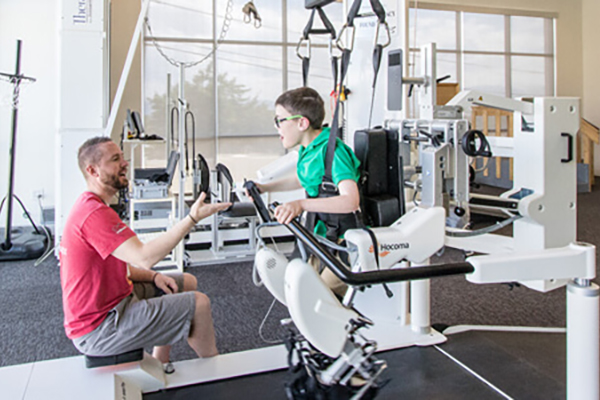
Below are the key factors to consider when selecting a linear actuator for this application.
- Precise speed and force control — therapy requires exact repetition of prescribed movements.
- Force feedback essential to prevent patient injury during passive exercise.
- Emergency stop must be immediately accessible to both patient and therapist.
- Quiet operation — therapy sessions can be long and sound-sensitive.
- Low speed (1–10 mm/s) for controlled therapeutic motion.
- High cycle life — rehabilitation equipment operates many hours daily.
Laboratory & Diagnostic Automation
Diagnostic laboratory automation systems integrate multiple linear actuators (often 5–10 per instrument) positioned within the sampling arm assembly, reagent carousel mechanisms, rack transport tracks, and pipetting heads. These actuators perform sample rack elevation — lifting sample tubes into the aspiration position for hematology and chemistry analyzers, probe needle vertical motion — lowering/raising the sampling needle for precise fluid aspiration and dispensing, reagent cassette indexing — moving reagent cartridges linearly to position them under the sampling head, microplate shaker/washer head movement — positioning wash heads precisely over microwells, slide loader/coverslipper motion — moving glass slides along the processing track in histology, capping/decapping — raising/lowering cap grippers to open/close sample tubes, automated pipetting head vertical positioning — moving the multi-channel pipette for aspiration/dispensing, and cartridge/test strip positioning — advancing point-of-care test cartridges through the reader mechanism.
Below are the key factors to consider when selecting a linear actuator for this application.
- High speed required for throughput — modern analyzers process hundreds of samples per hour.
- Extremely high repeat positioning accuracy (±0.01mm) for precise fluid handling.
- Long life (> 5,000,000 cycles) — lab automation runs 24/7 in high-volume facilities.
- Low maintenance — access is difficult once instruments are deployed.
- Low vibration prevents sample contamination or spillage.
- Chemical resistance — actuators may be exposed to reagents, solvents, and cleaning agents.
Medical Carts, Workstations & Overhead Systems
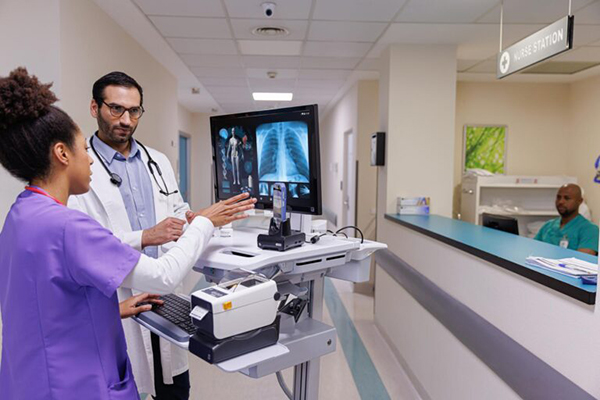
Medical carts, mobile workstations, and overhead ceiling lifts use 1 to 3 linear actuators positioned within the vertical lift columns of the cart, inside the overhead rail trolley mechanisms, and within IV pole support structures. These actuators perform keyboard/monitor lift — raising/lowering computer displays and input devices on nursing carts to ergonomic heights for seated or standing use, mobile workstation height adjustment — adjusting the entire cart surface for user comfort, overhead patient ceiling lift trolley movement — moving lifting trolleys along overhead track systems for patient transfer, IV pole height adjustment — raising/lowering IV bag hooks to control gravity flow rates, equipment boom lift — raising/lowering surgical booms in operating rooms for sterile access, and screen arm positioning — moving PACS/imaging diagnostic monitors to optimal viewing angles.
Below are the key factors to consider when selecting a linear actuator for this application.
- Compact / telescoping design required to fit within slim cart columns.
- Low noise essential for hospital and clinic environments.
- Battery compatibility for carts that move between wards without constant power access.
- Smooth, adjustable speed for fine ergonomic positioning.
- Load capacity typically 100N – 500N — enough for monitors, keyboards, and equipment.
How to Select the Right Linear Actuator for Medical Equipment?
Selecting the right linear actuator for medical equipment depends on the specific application requirements, including movement needs, operating environment, and equipment design.
Different medical devices require different actuator characteristics. For example, a hospital bed needs strong and reliable lifting capability, while medical imaging equipment requires highly accurate positioning.
When selecting a linear actuator, manufacturers should consider the following key factors:
- Load Capacity: Choose an actuator based on the required force to move and support the equipment or patient load.
- Stroke Length: Select the appropriate stroke length according to the required movement distance and installation space.
- Speed: Consider the movement speed required for smooth and comfortable operation.
- Duty Cycle: Ensure the actuator can handle the expected frequency of use and operating cycles.
- Feedback and Control: Choose suitable feedback options, such as Hall sensors or encoders, when precise positioning is required.
- Size and Installation: Consider the actuator dimensions, mounting method, and integration requirements of the medical equipment.
Why Choose BESTOP as Your Linear Actuator Supplier?
As one of China’s leading linear actuator manufacturers, BESTOP provides reliable motion solutions for medical equipment manufacturers worldwide.
With a comprehensive product portfolio, strong customization capabilities, and extensive engineering expertise, BESTOP is able to support a wide range of linear actuator requirements for different medical applications.
From hospital beds and patient lifts to rehabilitation equipment and other medical devices, BESTOP offers solutions designed to meet diverse application needs.
BESTOP Linear Actuator Parameter Range
| Parameter | BESTOP Range |
|---|---|
| Maximum Load (Force) | 50N – 10,000N |
| Stroke Length | 10mm – 1,000mm |
| Retracted Length | Custom — typically Stroke + 80mm to 150mm |
| Travel Speed (No Load) | 1 mm/s – 50 mm/s |
| Input Voltage | 12V / 24V DC (standard); 36V / 48V (available) |
| Duty Cycle | 10% – 25% (intermittent); up to 100% with cooling |
| IP Rating | IP20 – IP69K |
| Noise Level | ≤ 45dB (standard); ≤ 40dB (ultra-quiet) |
| Operating Temperature | -10°C to +65°C (standard); -40°C to +85°C (wide-range) |
| End Fittings | Ball socket, Clevis/U-fork, Threaded stud, Eyelet, Custom |
| Feedback / Sensors | Open-loop, Hall-effect, Potentiometer, Magnetic encoder, Force sensor |
| Housing Material | Aluminum, 304SS, 316LSS, Plastic/Composite |
| Piston Rod / Screw Material | Hardened steel (plated), 304SS, 316LSS, Titanium |
| Manual Release | Pull-cable, Push-button, Quick-release coupling |
| Certifications | ISO 9001, IATF 16949, IEC 60601-1 (compliant), RoHS, REACH, CE |
BESTOP Linear Actuator Quality Reflection
Quality is the foundation of reliable linear motion solutions, especially for applications such as medical equipment where safety, stability, and long-term performance are critical.
At BESTOP, linear actuator quality is reflected not only in product specifications, but also in every stage of design, manufacturing, and testing. From material selection and precision assembly to performance verification, every actuator is developed to ensure consistent operation and dependable performance in real-world applications.
Key aspects of BESTOP linear actuator quality include:
| Category | Details |
|---|---|
| Raw Materials | Top global suppliers — premium ground rods, NOK/Parker seals, pure copper motors |
| Manufacturing Process | Clean workshop + German/Japanese CNC + 6 in-line inspections + full traceability |
| Performance Data | 100,000 cycles + 720h salt spray test + ≤40dB + IP69K + -40°C~85°C operating temperature |
| Quality System | IATF 16949 + IEC 60601-1 compliance + audit-level documentation |
| Market Validation | 100+ medical customers + 90% retention rate + >98% on-time delivery + <0.5% complaint rate |
| After-Sales Service | 2-year warranty + free samples + 24h response + engineering support |
BESTOP Linear Actuator Factory Strength Showcase
BESTOP is a premier linear actuator brand with over 16 years of manufacturing expertise, delivering high-quality linear actuators built on precision engineering, rigorous quality control, and full traceability. Our state-of-the-art facility combines advanced manufacturing equipment, stringent testing protocols, and internationally recognized certifications to ensure every actuator meets the highest standards of performance and reliability.
- Trusted by 500+ medical industry clients and established as a long-term partner to many leading brands.
- Factory scale with over 10,000 m² production facility and 100+ employees, including engineering, production, and quality control teams.
- Compliance with international quality and safety standards (e.g., ISO, IATF 16949 and IEC 60601-1 certification).
- Production capacity of 10,000 linear actuators every two weeks.
- Strict tolerance control for consistent force output across production batches (Error within 0.2%).
- Verified cycle life testing and durability performance reports.
- Flexible minimum order quantities, on-time delivery rate exceeding 99%.
- Reliable after-sales service and technical support for long-term cooperation.
To help you more precisely identify the most suitable components or suppliers, we recommend that you provide the following specific requirements:
- What is the specific application scenario of your equipment? (e.g., hospital bed lifting, exoskeleton mechanisms, medical imaging equipment, or laboratory automation operations, etc.)
- What are your expected maximum push/pull load (in Newtons), stroke length (in mm), and operating speed?
- Are there any specific spatial installation constraints or control interface standards requirements?