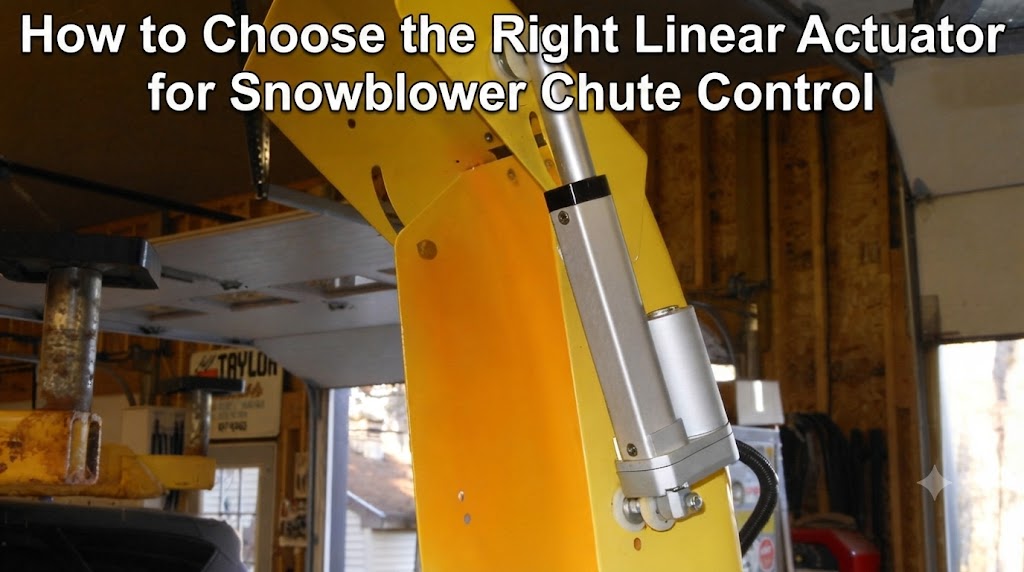
When winter strikes, commercial snow removal equipment and residential two-stage snowblowers face severe operational challenges. One of the most critical upgrades for modern equipment is replacing manual hand cranks or unreliable mechanical linkages with high-performance linear actuators for snowblower chute control.
Whether you are designing next-generation snow removal equipment or supplying aftermarket replacement kits, selecting the right electric linear actuator dictates the reliability, durability, and commercial success of your product in freezing environments.
As the leading linear actuator manufacturer in China, BESTOP delivers precision-engineered, weather-resistant actuation solutions designed specifically for heavy-duty outdoor machinery. This comprehensive guide explores what B2B buyers, OEMs, and distributors must consider when specifying linear actuators for snowblower chutes.
How to Use a Linear Actuators for Snowblower Chute
GASTAC linear actuators provide a revolutionary solution to this challenge. By integrating a linear actuator into a snow blower chute or snow plow blade system, you can adjust the direction and angle of your equipment with the push of a button—without interrupting operation or exposing yourself to harsh weather conditions.
This guide covers everything you need to know about selecting, installing, and operating linear actuators for snow removal applications, from residential snow blower chutes to commercial snow plow systems. GASTAC has helped countless customers successfully automate their snow removal equipment using our linear actuators. The installation solutions described in this article are compatible with John Deere tractors, Cub Cadet snow blowers, and virtually any snow removal equipment requiring remote component adjustment.
Why Use Linear Actuators for Snowblower Chute
Manually adjusting the snow chute and plow blade is not only inconvenient, but it also creates real safety and efficiency concerns. When operating a snow removal machine, both hands should always remain on the controls to ensure safe operation and prevent the machine from losing control on slippery surfaces. Stopping the machine to manually adjust the snow chute direction means:
- Interrupts the workflow and significantly increases the time required to clear an area
- Causes snow to re-accumulate in already cleared areas during adjustments
- Leads to frequent exposure to cold temperatures due to the repeated removal of protective gloves
- Creates potential safety hazards by diverting attention away from machine operation
- Causes physical strain due to repeated manual adjustments performed in awkward postures
With the linear actuator control system, you gain full control over the equipment and the ability to make real-time adjustments. This ensures continuous operation and more precise snow placement, while significantly reducing the physical strain associated with this demanding task.
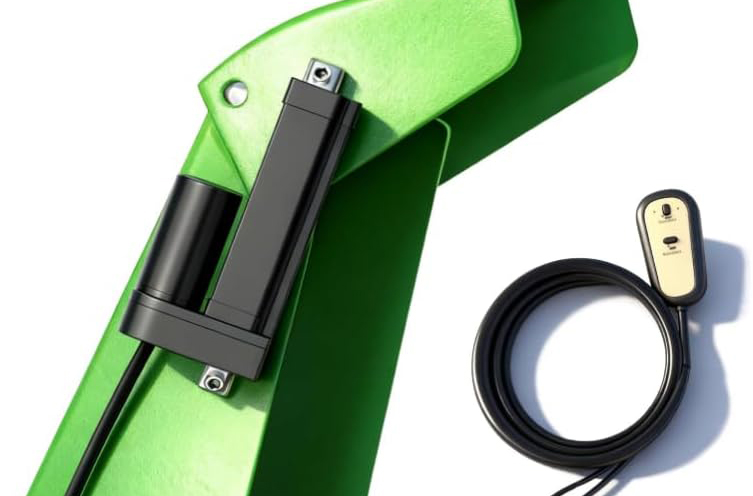
Outdoor Requirements for Snowblower Chute Linear Actuators
Snow removal applications present demanding operating conditions for electric actuators. With exposure to snow, ice, moisture, extreme cold, road salt corrosion, and prolonged outdoor use, selecting an actuator with a high level of protection is essential.
Linear Actuator Waterproof Rating
The IP (Ingress Protection) rating system defines how effectively an electrical enclosure protects internal components from the ingress of solid objects and liquids. For snow removal applications, understanding and selecting the appropriate IP rating is critical. An IP rating consists of two numbers: the first represents protection against solid particles, while the second indicates protection against water and other liquids.

For snow chute and snow plow applications, we recommend using actuators with a minimum protection rating of IP65, which provides protection against dust ingress and water jets projected from any direction. However, IP66 or IP67 ratings offer even greater protection for continuous outdoor environments. Our classic rod-style linear actuators achieve an IP66 protection rating when equipped with a rubber protective boot, making them an ideal choice for snow removal applications.
Linear Actuator Additional Protection Measures
Beyond selecting an actuator with an appropriate IP rating, consider these additional protective measures:
- Rubber boots: Installing protective rubber boots over the actuator rod provides an extra barrier against moisture, ice, and debris entering the actuator body.
- Mounting orientation: Position actuators so that water naturally drains away from electrical connections and mounting points.
- Cable protection: Use weather-resistant cable glands and ensure all wiring connections are sealed and protected from the elements.
- Regular maintenance: Clean actuators after use to remove salt and debris, and apply appropriate lubricants to exposed metal components.
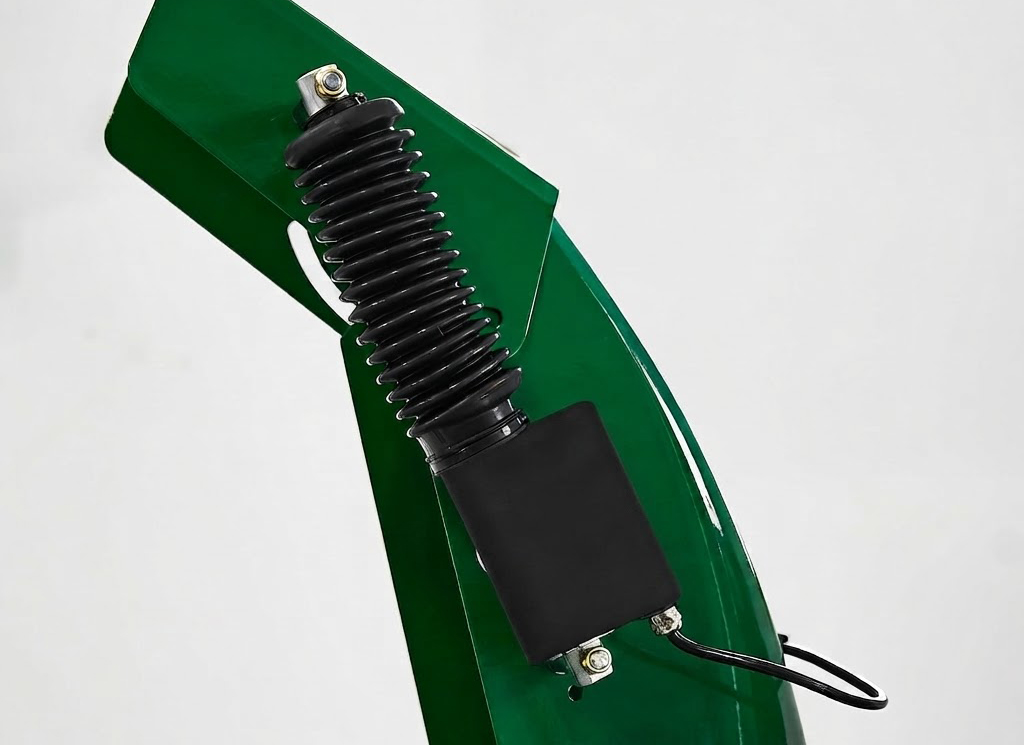
Linear Actuator Automates Directional Control of Snow Blower Chute
Automating the discharge chute of a snow blower is one of the most common applications for compact linear actuators. Installation is simple, and the improvement in operational efficiency is immediate. Most snow blowers use a simple joystick or crank mechanism to rotate the discharge chute left or right—an existing mechanical system that provides an ideal foundation for integrating an actuator.

Selecting the Right Linear Actuator for Snowblower Chute Control
Lorem ipsum dolor sit amet, consectetur adipiscing elit. Ut elit tellus, luctus nec ullamcorper mattis, pulvinar dapibus leo.

- Stroke: Measure your physical range of motion first; a 4-inch or 6-inch stroke fits most deflector flips and side-to-side chute rotations.
- Force Rating: Choose 35 lbs to 150 lbs of dynamic force. Heavy metal chutes or icy buildup need higher force (100+ lbs), while light plastic deflectors need only about 35 lbs.
- Weatherproof Rating: Look for an IP65 or IP66 water-resistance rating, or add a protective rubber boot to block melting snow and freezing ice.
- Voltage: Standardize on a 12V DC model that hooks directly into your tractor or snowblower battery system.
- Switch Type: Use a DPDT (Double Pole Double Throw) momentary rocker switch (spring-loaded to return to off) to reverse polarity and extend or retract the rod.
- Protection: Always install an in-line fuse (typically 10A) to protect the motor from short circuits if the chute jams on packed ice.
- Limit Switches: Built-in internal limit switches are vital; they automatically cut power when the actuator reaches maximum extension or retraction to save the motor from burning out.
Linear Actuaotr for Snow Plow Blade Control Systems
Controlling snow plow blades is far more complex than simply rotating a snowblower chute, as adjustments are typically required across two axes: the horizontal angle (yaw) to direct snow to the left or right, and the vertical tilt to control how the blade contacts the ground. Specialized electric linear actuators for snow plow systems can automate both movements, ensuring maximum efficiency.
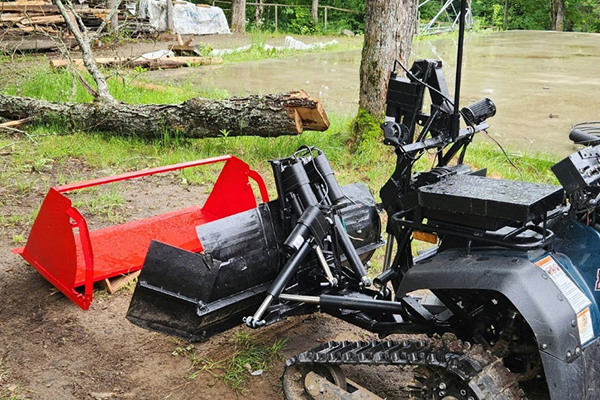
Understanding Linear Actuator Control of Dual-Axis Blades
- Horizontal Angle Control (Yaw): This adjustment function allows the blade to be rotated left or right, directing snow to the desired side of the plowing path. A single horizontally mounted linear actuator controls this movement, eliminating the need for traditional manual levers or hydraulic cylinders. For this application, an actuator with a force rating of 150 lbf is typically sufficient, while larger commercial-grade blades may require higher force output.
- Vertical Tilt Control: This adjustment function raises or lowers the blade’s cutting edge to control the contact pressure against the surface. This capability is especially important when transitioning between different road surfaces or adapting to varying snow depths. Since the actuator must overcome the weight of the blade assembly, vertical adjustment requires higher force. A minimum force rating of 200 lbf is recommended for this application, while larger or heavier blades may require actuators exceeding 300 lbf.
Selecting the Right Linear Actuator for Snow Plow Blade
- Horizontal Angling: Depending on the plow blade size and snow resistance, a force of 150 to 800 lbs is required. Heavy-duty actuators, such as the Progressive Automations PA-17, can deliver up to 800 lbs of force to handle high-load operations.
- Vertical Lifting/Tilting: A force of at least 200 to 300 lbs is required to effectively overcome the weight of the blade itself.
- Stroke Length: Horizontal actuators typically require a stroke of 4 to 8 inches, while vertical actuators usually need 4 to 6 inches, depending on whether you are adjusting the angle or the lift height. Before purchasing, measure the mounting geometry at both full extension and full retraction.
- Voltage: Standard 12V DC operation allows for easy connection to truck, tractor, or 16-18 ATV batteries.
- Waterproofing: Choose products with a high IP rating (IP65 or higher) and robust rubber seals to protect internal gears from meltwater, road salt, and severe moisture.
- Overload Protection: Utilize pivoting mounting brackets and physical frame stops to absorb severe lateral impacts, preventing the internal rod from bending under sudden shock loads.
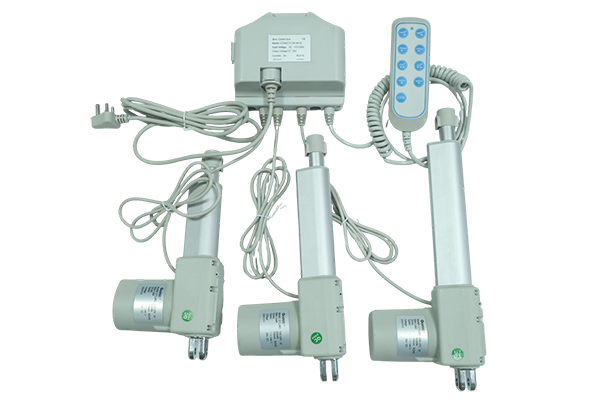
Force Calculation for Snow Plow Blade Linear Actuator
Determining the appropriate force rating for a plow blade application requires an understanding of the mechanical advantage created by the actuator mounting configuration. The required actuator force is influenced by several key factors:
- The overall weight of the plow blade assembly
- The distance between the pivot point and the actuator mounting location
- The actuator force angle relative to the blade geometry
- Additional resistance caused by snow loading during operation
For most plow blade applications, actuators rated between 200–300 lbf are typically suitable for vertical blade control, while 150–200 lbf actuators are generally sufficient for horizontal angle adjustment.
As a general guideline, mounting the actuator closer to the pivot point requires more force but less stroke, while mounting farther from the pivot reduces force requirements but increases stroke needed. Most plow blade installations benefit from 200-300 lbs force actuators for vertical control and 150-200 lbs for horizontal control.
The Impact of Weather on Electric Linear Actuator Kits
Cold temperatures can significantly impact electrical system performance and are important considerations for maintaining reliable linear actuator operation:
- Battery Capacity: Lead-acid batteries experience reduced capacity in freezing temperatures. Ensure the battery is properly maintained and fully charged before winter operation to maximize actuator performance.
- Wire Flexibility: Certain wire insulation materials can become stiff and brittle in extremely cold conditions. Use wiring rated for low-temperature flexibility to prevent insulation cracking, connection issues, and potential system failures.
- Connection Integrity: Verify that all electrical connections are clean, secure, and properly protected against moisture. Exposure to road salt and water can accelerate corrosion and compromise electrical reliability.
- Actuator Speed: Linear actuators may operate slightly slower in extremely cold environments as internal lubricants become more viscous. This is a normal operating condition and does not necessarily indicate a malfunction.
Linear Actuator Installation Tips and Practical Recommendations
Successful actuator integration requires more than simply mounting components in place. The following guidelines help ensure reliable, long-term operation.
Linear Actuator Mounting Geometry Optimization
Actuator performance is highly dependent on mounting geometry. Ideally, the linear actuator should apply force perpendicular (90 degrees) to the component being moved. As the mounting angle deviates from perpendicular, the effective force decreases according to the cosine relationship.
In practical applications, the mounting angle will change throughout the linear actuator’s range of motion, which is normal. Optimize the geometry so the linear actuator operates most efficiently through the middle of its travel range, where it is used most frequently. The MB6 swivel body bracket helps accommodate changing angles by allowing the linear actuator body to rotate.
Linear Actuator Mechanical Limit Protection
Linear actuators include internal limit switches that stop movement at the end of the stroke. However, whenever possible, the mechanical system should reach its physical limits before the linear actuator does. This prevents the actuator from continuously applying force against a hard stop, reducing long-term stress on the actuator and mounting components.
For chute rotation applications, adjust the mechanical stops to limit rotation before the actuator reaches full extension or retraction. This provides a more secure and consistent stopping point during operation.
Linear Actuator Maintenance Access Considerations
Design the installation to allow easy access for routine maintenance. Ensure you can:
- Inspect electrical connections without major disassembly
- Remove and reinstall the linear actuator when service is required
- Remove snow and debris around the linear actuator
- Access the fuse holder for replacement
A simple maintenance checklist is recommended, including cleaning the linear actuator after heavy use, inspecting electrical connections, and checking mounting hardware for looseness.
Linear Actuator Testing Before Snow Season
Install and test the linear actuator system before the first snowfall. Early testing allows potential issues to be identified and corrected under normal working conditions rather than during an emergency. Operate the system through its full range of motion several times, verifying smooth movement, sufficient force output, and proper electrical operation.
Linear Actuator for Snow Plow Blade Common Issues
Understanding how to identify and resolve common issues helps maintain reliable system operation when it is needed most.
Linear Actuator Not Moving
If the linear actuator does not respond when the switch is activated:
- Check the fuse. A blown fuse is the most common cause and may indicate a short circuit or mechanical binding that resulted in excessive current draw.
- Verify battery voltage. The system requires a minimum of 10.5V for proper operation.
- Inspect all electrical connections for corrosion, loose connections, or damage.
- Test the switch by measuring voltage at the linear actuator terminals while the switch is activated.
Linear Actuator Insufficient Force or Slow Movement
If the linear actuator operates but lacks sufficient power or moves slower than expected:
- Low battery voltage is the most common cause. Charge or replace the battery as needed.
- Check for mechanical binding within the system being moved by the actuator.
- Verify that ice buildup is not restricting movement of mechanical components.
- In extreme cold conditions (below 0°F), reduced speed is normal due to increased lubricant viscosity.
Linear Actuator Erratic or Intermittent Operation
If linear actuator operation is inconsistent or unreliable:
- Inspect wiring connections. Vibration can loosen connections over time.
- Check for damaged wire insulation that may cause intermittent electrical shorts.
- Verify that the switch is functioning properly and has not been affected by moisture.
- Ensure mounting brackets remain secure, as loose brackets can create mechanical binding.
Linear Actuator Maintenance and Winterization
Proper maintenance helps maximize actuator service life and ensures reliable operation throughout the winter season.
Preparation before Snow Clearing with Linear Actuator
- Clean all components thoroughly and remove any dirt, debris, or residue from the previous season.
- Inspect electrical connections and remove any corrosion using electrical contact cleaner.
- Apply a thin layer of corrosion-resistant spray to electrical connectors for added protection.
- Cycle the linear actuator through its full travel range several times to distribute internal lubricant.
- Check all mounting hardware and ensure it is properly tightened. Verify that the protective rubber boot (if equipped) is intact and properly installed.
Maintenance during use of Linear Actuator
- Remove accumulated snow and ice from around the linear actuator after each use.
- Avoid repeatedly operating the linear actuator against hard mechanical stops.
- If ice buildup occurs on the linear actuator, allow it to thaw before operation.
- Periodically inspect electrical connections for corrosion caused by road salt exposure.
Linear Actuator End of Season Storage
- Thoroughly clean the entire system, paying particular attention to removing road salt residue.
- Apply a light coating of lubricant to exposed metal surfaces.
- If equipment is removed for summer storage, consider positioning
- the actuator at mid-stroke and storing it in a dry environment.
- Disconnect electrical connections and protect them from moisture during storage.
Selecting the Right Linear Actuator for Winter Equipment
Automating snow removal equipment with electric linear actuators is a practical upgrade that improves safety, efficiency, and operator convenience. Whether you are controlling a residential snowblower chute or automating a commercial snow plow blade system, the right actuator solution can significantly simplify operation in demanding winter environments.
With the correct components, proper installation, and routine maintenance, electric actuator systems can provide dependable operation season after season, even under challenging conditions involving snow, ice, and road salt exposure.
At BESTOP, we have supported snow removal automation projects since 2007, helping customers develop reliable actuator solutions for a wide range of winter equipment applications. From snowblower chute control to snow plow blade adjustment, our team can provide application-specific recommendations to help you select the right actuator and optimize your installation.
If you are planning a snow removal automation project or need assistance with actuator selection, contact BESTOP for expert guidance based on your equipment requirements.
Frequently Asked Questions
What force rating do I need for my snow blower chute?
A 150 lbf actuator is sufficient for most residential and light commercial snow blower chutes. Larger commercial chutes may require 200 lbf. The required force depends mainly on the actuator mounting position and mechanical advantage, not just chute weight.
Will the actuator work in extreme cold temperatures?
Yes. The actuator can operate in temperatures down to -20°F (-29°C). Slower movement in extreme cold is normal due to thicker lubricants. Use IP66 or higher protection, maintain battery charge, and add a protective boot if needed.
Can I control multiple actuators with one system?
Yes. Each actuator requires its own control circuit and fused power supply. Dual-axis plow control typically uses two actuators controlled by separate switches or a multi-channel controller.
How do I protect the electrical wiring from the elements?
Use waterproof connectors, heat-shrink terminals, dielectric grease, and secure cable routing. Keep wiring away from snow and road salt exposure. Marine-grade wire is recommended for permanent outdoor installations.
What stroke length do I need?
Stroke length depends on the application geometry. Measure the required movement range and select an actuator with a matching stroke length.