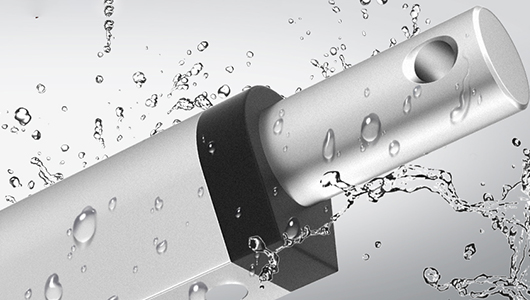
At Bestop linear actuator manufacturer, we do not define waterproof linear actuator as simple catalog products. We define them as engineered motion systems designed for environments where exposure to moisture, weather, or washdown conditions is part of normal operation.
In real industrial applications, failure is rarely related to load capacity or basic electrical performance. The most common failure factor is environmental sealing breakdown over time. This is why proper selection must be based on application conditions rather than IP labels alone.
Engineering Definition of Waterproof Linear Actuator
A waterproof linear actuator is a sealed electromechanical device designed to maintain stable operation under environmental exposure such as rain, humidity, dust, vibration, and in some cases temporary immersion or high-pressure washing.
However, waterproof performance is not absolute. It is defined by structural design, sealing system, material selection, and operational dynamics—not only IP rating. At Bestop, we classify waterproof performance based on real operating environments rather than marketing definitions.
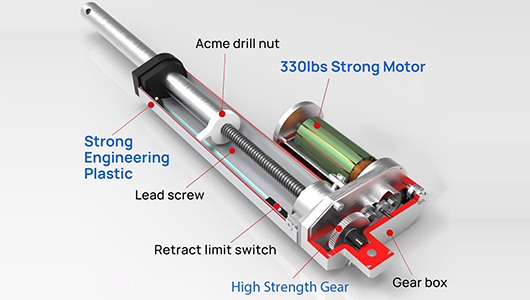
Waterproof Linear Actuator Applications
Instead of treating IP ratings as product categories, we align protection levels with real environmental conditions:
1. Light Outdoor Exposure
Typical conditions:
- Occasional rain
- Limited dust exposure
- Partial shielding
Recommended protection level:
- IP65 linear actuator / IP66 linear actuator
Used in:
- Semi-protected automation systems
- Controlled outdoor installations
2. Continuous Outdoor Operation
Typical conditions:
- Daily rain exposure
- Temperature variation
- Long operating cycles
Recommended protection level:
- IP67 linear actuator
This is the most common baseline for outdoor linear actuator systems, especially where reliability is required under continuous environmental stress.
3. High Humidity / Marine Environment
Typical conditions:
- Salt mist exposure
- Constant humidity
- Corrosive atmosphere
- Long-term outdoor exposure without protection
Recommended solution:
- IP68 linear actuator
- Marine-grade sealing and corrosion-resistant materials
This category is critical for marine linear actuator 12v applications such as boat hatches, deck systems, and offshore equipment.
4. High-Pressure Washdown Environment
Typical conditions:
- High-pressure water cleaning
- Industrial sanitation processes
- Thermal water exposure
Recommended protection level:
- IP69K linear actuator
This level is required in food processing, heavy industry, and environments where cleaning pressure exceeds standard outdoor exposure.

Why IP Ratings Alone Are Not a Performance Guarantee?
IP ratings such as IP65, IP67, IP68, and IP69K define protection levels under controlled laboratory conditions. They do not define:
- Long-term sealing stability
- Dynamic movement performance
- Vibration resistance
- Material aging behavior
In real applications, a waterproof linear actuator operates under continuous mechanical motion, which introduces stress on sealing interfaces. Over time, this dynamic condition becomes the primary cause of failure rather than initial ingress resistance.
Practical Decision Differences Between IP Levels
IP ratings should not be interpreted as a simple upward scale of performance. In real engineering selection, each protection level corresponds to a specific type of environmental exposure, and the correct choice depends on application conditions rather than numerical value.
IP65 linear actuator
Typically used in light-duty or semi-protected environments with limited water exposure. It can resist low-pressure water jets and dust ingress, making it suitable for indoor-outdoor transitional installations or applications with occasional splashing, but not for continuous outdoor rain or harsh weather conditions.
IP66 linear actuator
Typically used in environments with intermittent or indirect water exposure. Common conditions include light outdoor use, occasional rain, or partially protected installations. It is not intended for continuous outdoor operation or long-term wet cycling environments.
IP67 linear actuator
Considered the standard protection level for most outdoor automation systems. Suitable for applications exposed to regular rainfall, temporary water immersion, and continuous outdoor operation where environmental conditions are stable but unavoidable.
IP68 linear actuator
Required for environments where water exposure is prolonged or where accumulation of moisture is expected. Common in marine linear actuator 12v systems, offshore equipment, and installations where long-term humidity or partial submersion occurs.
IP69 linear actuator
Not an incremental upgrade of IP67 or IP68, but a separate classification designed for high-pressure, high-temperature washdown conditions. Typical applications include food processing equipment, industrial cleaning systems, and environments requiring repeated high-pressure water exposure.
Selection Principle
The correct selection is determined by exposure type and operating condition, not by comparing IP ratings numerically. Each level represents a different environmental category, and misalignment between application and protection level is the primary cause of premature failure.
Key Engineering Factors That Determine Waterproof Reliability
From a manufacturing perspective, waterproof performance depends on system-level design, not a single parameter. At Bestop linear actuator manufacturer, we focus on the following critical elements:
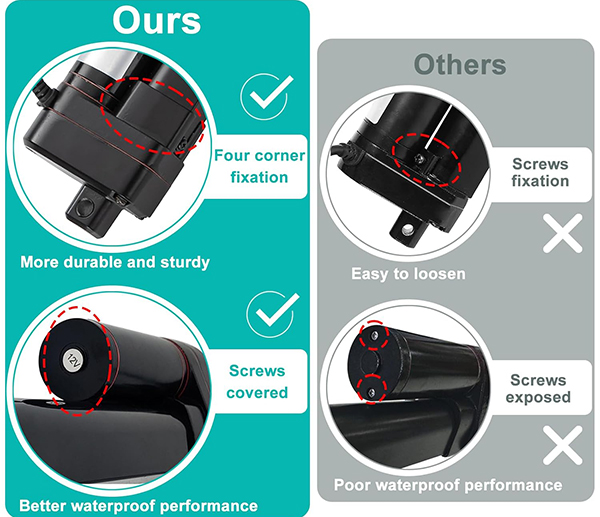
- Multi-layer sealing architecture: Instead of relying on a single sealing point, multiple sealing interfaces are used to reduce leakage risk during long-term motion.
- Dynamic sealing stability: The actuator must maintain sealing integrity during repeated extension and retraction cycles under load and environmental stress.
- Housing precision and structural alignment: Tolerance control directly affects long-term sealing reliability, especially under vibration or mechanical stress.
- Material selection for environmental resistance: Corrosion resistance is essential for outdoor linear actuator and marine applications, particularly in salt or humidity-rich environments.
- Long-cycle validation testing: Beyond IP certification, real performance must be verified through extended operational cycle testing under environmental exposure conditions.
Key Technical Parameters for Selecting a Waterproof Linear Actuator
In addition to environmental classification, selecting a suitable waterproof linear actuator requires a systematic evaluation of key mechanical and electrical parameters. These parameters directly influence performance, durability, and long-term system stability. In real applications, factors such as load capacity, motion range, and operating speed must be matched carefully with environmental protection requirements to ensure reliable operation under varying conditions. Below are the core parameters that should be evaluated:
- Force rating: Determines whether the actuator can operate under load without over-stressing internal components or sealing structures. Incorrect sizing can reduce overall system reliability.
- Stroke length: Defines the required range of motion and must match installation geometry to prevent mechanical interference or inefficient operation.
- Operating speed: Impacts system performance and thermal behavior. In continuous-duty applications such as outdoor linear actuator systems or waterproof linear actuator 12V configurations, speed must be balanced with heat generation and duty cycle limits.
Waterproof Linear Actuator Application-Driven Selection Logic
Correct selection of a waterproof linear actuator is not based on choosing the highest IP rating. It is based on matching environmental stress with structural capability. For example:
- Waterproof linear actuator 12V systems used in mobile equipment Require both sealing and vibration resistance.
- Outdoor linear actuator systems Require a balance between exposure protection and thermal stability.
- Marine linear actuator 12V systems Require corrosion resistance in addition to sealing performance.
- Industrial washdown systems Require pressure resistance rather than full immersion resistance.
Incorrect selection often leads to premature failure even when IP ratings appear sufficient on paper.
Common Failure Mechanisms in Real Applications
In field applications, water ingress is rarely caused by a single failure point. It typically develops over time through:
- Micro-gap sealing degradation
- Rod seal wear under continuous motion
- Cable entry fatigue
- Thermal expansion and contraction cycles
- Pressure variation during operation
These factors accumulate gradually, which is why many linear actuators pass initial testing but fail after months of real use.
Why Choose Bestop Linear Actuators?
As a linear actuator manufacturer, Bestop focuses on designing systems that perform reliably under real-world conditions rather than laboratory definitions. Our engineering approach is based on:
- Application-specific sealing design
- Environmental classification before product selection
- Structural optimization for long-term stability
- Consistent production quality for OEM and bulk supply
This ensures that each waterproof linear actuator is matched to its intended operating environment rather than selected solely by specification sheet.
OEM / Bestop Linear Actuator Manufacturer Capability
As a professional linear actuator manufacturer, Bestop focuses not only on standard product supply but also on providing application-driven engineering support for OEM and industrial customers. In real-world projects, different environments require different structural, electrical, and sealing configurations, so customization and validation become critical parts of the engineering process rather than optional services. Below are the main capabilities and considerations:
- Application-specific engineering support for OEM and industrial clients beyond standard product supply
- Customization options including force range adjustment, stroke modification, mounting structure design, voltage configuration (such as waterproof linear actuator 12V and 24V systems), and sealing optimization based on environmental conditions
- Mass production consistency to ensure stable performance across large batches, especially for outdoor linear actuator and marine linear actuator applications
- Comprehensive testing including IP certification verification and long-cycle operational durability validation under real-world conditions

Final Design and Engineering Insights
A waterproof linear actuator is not defined by a single IP rating or catalog description. It is defined by how well its sealing system, structure, and materials perform under real environmental conditions over time. For practical selection:
- IP65 / IP66 → light outdoor exposure
- IP67 → standard outdoor automation
- IP68 → marine and high-moisture environments
- IP69K → high-pressure industrial washdown
Correct selection is not about choosing the highest rating, but about matching engineering design to real application stress. At Bestop Linear Actuator Manufacturer, our goal is not only to supply actuators, but to provide engineering-defined motion solutions that remain stable throughout their operational lifecycle.